Leave Your Message

Top 10 TV Stand Closed Storage Options for Global Buyers

A television stand now does more than support a screen. It organizes cables, hides remotes, and protects everyday items from dust. For global buyers, Tv Stand Closed Storage also influences room safety, visual balance, and long-term furniture value.

Recent market evidence supports this shift. Grand View Research reports continued growth in the global home furniture market, driven by urban living and multifunctional products. The Consumer Technology Association also shows that connected entertainment devices remain common in modern households. Meanwhile, Houzz research repeatedly highlights storage and media organization as practical renovation priorities. These findings suggest that closed compartments are not decorative extras. They answer real problems, especially in smaller apartments and open-plan homes.

Ray Allegrezza, a longtime furniture-industry analyst and former Furniture Today editor, once described successful furniture as “a blend of function, comfort, and design.” That principle guides this selection of ten closed-storage TV stands. Each option is considered through construction quality, ventilation, cable access, sizing, finish, and international purchasing practicality. Some models offer adjustable shelves. Others provide sliding doors, soft-close hinges, or discreet rear openings. Small details matter.

A buyer should still measure carefully. A beautiful cabinet can fail beside a wide soundbar or deep gaming console. Material claims also deserve scrutiny. Certification language is not always consistent across markets. This guide may not fit every household, and a few choices remain subjective. That is worth admitting. Reliable buying decisions need both expert criteria and personal judgment.
Top 10 TV Stand Closed Storage Options for Global Buyers

Market Scope: Ten Closed-Storage TV Stand Formats for Global Buyers

Closed-storage TV stands are moving beyond one universal cabinet. Grand View Research valued the global furniture market at approximately USD 648.1 billion in 2022. Its 2023–2030 outlook also indicates steady annual growth. This wider trend supports practical media furniture, especially in homes needing dust control and visual order.

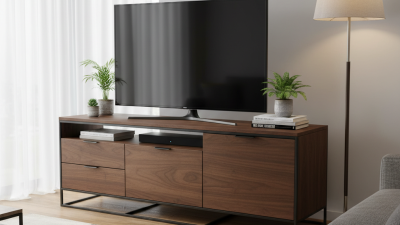
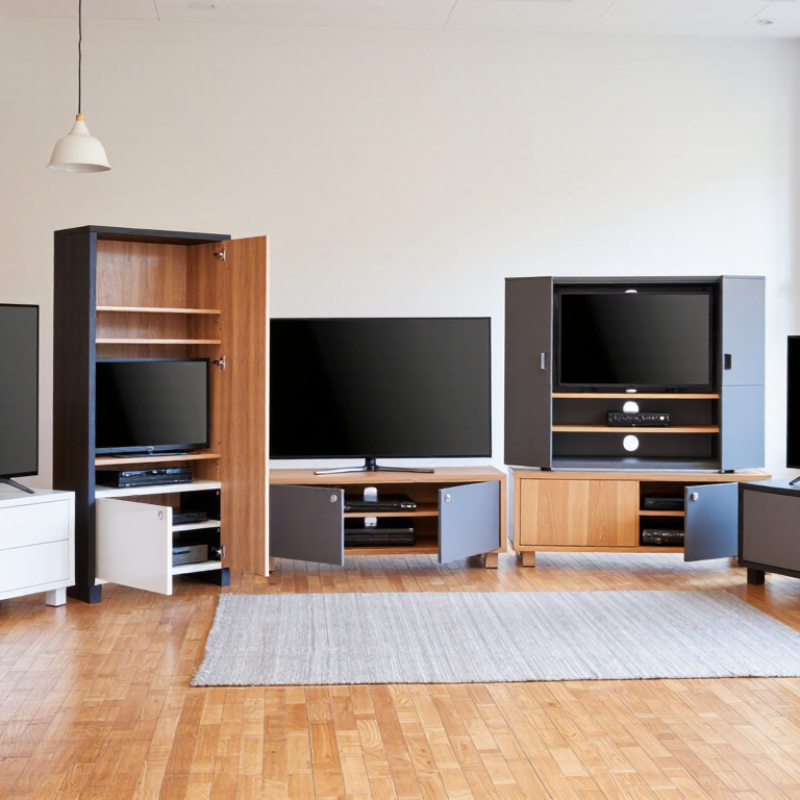
The market scope includes ten closed-storage formats: hinged-door consoles, sliding-door cabinets, tambour-door units, lift-up-door stands, drawer-and-door combinations, modular cabinets, corner consoles, wall-mounted units, media towers, and integrated fireplace-style cabinets. Each format serves different rooms and viewing habits. A small apartment may need a wall-mounted cabinet. A family room may require drawers for controllers, books, and cables. Tambour doors add airflow, but their tracks can collect dust.

Technavio’s furniture market outlook for 2024–2028 forecasts growth of more than USD 84 billion. However, broad furniture data does not measure TV stands alone. That limitation matters. Buyers should compare internal volume, panel thickness, hinge quality, ventilation gaps, and anti-tip design. Check dimensions carefully. A 55-inch screen can still overwhelm a narrow cabinet. Cable openings should sit behind devices, not beneath them. Regional plug layouts, delivery conditions, and assembly skills also change the best choice. Market reports show momentum, but they cannot replace room-level testing. That part remains imperfect.
Fit and Safety Metrics: 32–85-Inch TVs, VESA, and IEC 62368-1

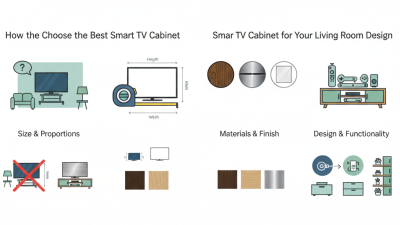
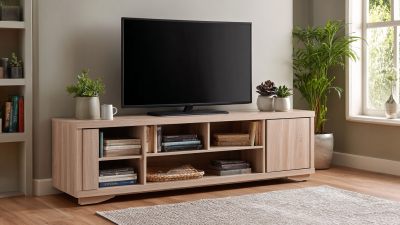
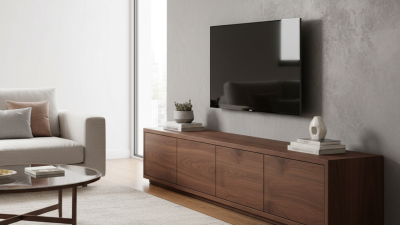
Choosing closed TV storage for a 32–85-inch screen starts with measurements, not appearance. A television’s diagonal size does not show its real width, depth, or foot position. Measure the screen, stand, cables, and wall clearance. Leave at least 5–10 centimeters around heat-producing equipment when the cabinet doors are closed. Small gaps matter.

VESA compatibility also needs careful checking. Record the horizontal and vertical hole spacing on the television, then compare it with the mount or cabinet bracket. The support must match the listed load capacity, not just the screen size. For larger 75–85-inch televisions, a wide base and low center of gravity reduce tipping risk. Wall anchoring is strongly preferred where practical. Cabinets should include restrained doors, rounded edges, and cable openings that do not pinch wires.

IEC 62368-1 focuses on safety for audio, video, information, and communication technology equipment. It is useful when reviewing electrical clearances, accessible energy, and protective design. However, a cabinet is not automatically certified because a television follows this standard. Ask for clear test documents and installation instructions. Check ventilation paths, power-strip placement, and heat buildup during several hours of use. Remote signals may also weaken behind solid doors. A ventilated panel can help, but it may reduce dust protection. There is no perfect universal option. Recheck every measurement before buying.

Material Compliance: E1 ≤0.124 mg/m³, FSC Sourcing, and X5.9 Testing

For global buyers, a closed TV stand should protect electronics and support responsible material choices. E1 compliance means formaldehyde emissions must not exceed 0.124 mg/m³. Ask for the laboratory report, test date, sample description, and chamber conditions. Do not rely on a claim printed on a product page.

Look closely at the panels, edge bands, and interior shelves. A sealed cabinet can still hold odors if adhesives release emissions. During supplier evaluation, request recent X5.9 testing records and confirm exactly what the protocol measures. The report should identify the tested construction, not only a similar model. Small details matter here.

FSC sourcing adds another layer of traceability. Request the certificate number and verify whether it covers the supplied wood-based materials. Packaging, hardware, and decorative layers may follow different documentation. That distinction is easy to miss.

Real inspections remain useful. Open the doors, check ventilation gaps, and examine unfinished edges. Measure panel thickness against the specification. Compliance documents can be accurate yet incomplete. No document removes every risk. A practical review should compare test evidence, production samples, and shipment records before purchase. Some suppliers may not explain X5.9 clearly, and that deserves a careful question rather than an assumption.

Top 10 TV Stand Closed Storage Options for Global Buyers - Material Compliance: E1 ≤0.124 mg/m³, FSC Sourcing, and X5.9 Testing

Comparative procurement table for closed-storage TV furniture, based on commonly specified commercial dimensions, materials, and buyer verification requirements.

Rank Closed-Storage Configuration Recommended TV Size Overall Dimensions
(W × D × H)
Primary Construction Storage Layout Suggested Top Load Material Emissions FSC Sourcing X5.9 Testing Evidence Global Buyer Advantages
1 Wide Sliding-Door Console 55–75 in 1800 × 400 × 550 mm 18 mm engineered wood panels; paper or wood-grain laminate; metal sliding-door track Two adjustable internal shelves; fully enclosed front 50 kg evenly distributed E1 target: ≤0.124 mg/m³ FSC claim and chain-of-custody documents required X5.9 report required before approval Large media capacity, clean appearance, and efficient use of wall width
2 Low Four-Door Media Cabinet 65–85 in 2000 × 420 × 520 mm Particleboard or MDF carcass; painted or laminated door fronts; concealed hinges Four closed compartments with adjustable shelves 60 kg evenly distributed E1 target: ≤0.124 mg/m³ Use FSC-certified panels where specified X5.9 stability and load evidence required Suitable for large screens and concealed gaming or audio equipment
3 Compact Two-Door TV Stand 43–55 in 1200 × 380 × 500 mm Engineered wood body; laminated surface; soft-close or standard hinges Two enclosed cabinets with one shelf in each side 35 kg evenly distributed E1 target: ≤0.124 mg/m³ FSC documentation recommended X5.9 test file to be confirmed Space-efficient format for apartments, bedrooms, and smaller living rooms
4 Rattan-Front Closed Console 50–65 in 1600 × 400 × 560 mm Engineered wood frame; natural or synthetic rattan door inserts; timber or metal legs Two ventilated closed compartments with removable shelves 45 kg evenly distributed E1 target: ≤0.124 mg/m³ FSC panel and solid-wood documentation required X5.9 report plus door-retention evidence required Decorative ventilation and strong appeal for natural-style interiors
5 Wall-Mounted Floating Cabinet 50–65 in 1500 × 350 × 380 mm 18 mm MDF or particleboard; concealed wall cleat; laminated or painted finish Two lift-up or hinged doors; concealed cable cavity 30 kg cabinet load, subject to wall fixing E1 target: ≤0.124 mg/m³ FSC sourcing statement required X5.9 wall-fixing and load evidence required Easy floor cleaning and a minimalist profile; installation substrate must be checked
6 Tall Side-Storage TV Unit 55–75 in 1800 × 400 × 650 mm Engineered wood carcass; closed side towers; adjustable feet or plinth base Central equipment bay plus two tall side cupboards 50 kg evenly distributed E1 target: ≤0.124 mg/m³ FSC-certified board evidence required X5.9 anti-tip and load report required High storage volume for books, consoles, accessories, and household media
7 Sliding-Shutter Media Unit 55–75 in 1700 × 400 × 560 mm Engineered wood panels; tambour or sliding shutters; metal or polymer runners Three internal zones with adjustable shelving 45 kg evenly distributed E1 target: ≤0.124 mg/m³ FSC claim verification required X5.9 door-cycle and load evidence required Doors require less clearance than swing-door designs and conceal equipment effectively
8 Open-Base Enclosed Console 50–65 in 1500 × 390 × 500 mm Engineered wood storage box; solid-wood or metal legs; laminated finish Two closed cupboards with open plinth clearance 40 kg evenly distributed E1 target: ≤0.124 mg/m³ FSC sourcing recommended for panels and legs X5.9 stability and leg-strength evidence required Balanced mix of concealed storage, visual lightness, and easier floor access
9 Corner TV Storage Cabinet 43–55 in 1100 × 500 × 550 mm Engineered wood panels; corner-optimized carcass; adjustable feet Two angled closed doors with rear cable cut-outs 35 kg evenly distributed E1 target: ≤0.124 mg/m³ FSC panel documentation required X5.9 anti-tip and load report required Maximizes unused corners and supports compact-room layouts
10 Modular Stackable TV Credenza 55–75 in 1600 × 400 × 600 mm Modular engineered wood boxes; reinforced connectors; laminated or painted surfaces Three enclosed modules with removable or adjustable shelves 45 kg evenly distributed E1 target: ≤0.124 mg/m³ FSC sourcing and module traceability required X5.9 stacking, connection, and load evidence required Flexible assortment planning, easier replacement, and efficient flat-pack logistics
Compliance note: E1 ≤0.124 mg/m³ is shown as a procurement specification target for the finished panel system. FSC status should be supported by a valid certificate and chain-of-custody documentation. “X5.9 testing” is treated as a buyer-required test-file checkpoint; the applicable test method, sample configuration, load condition, and pass criteria should be confirmed in the purchase specification.
Buyer verification checklist: request the latest emissions test report, FSC certificate or valid sourcing documentation, X5.9 test report, material composition, panel thickness, load-test method, anti-tip details, packaging dimensions, and installation instructions before final approval.

Global Logistics: Flat-Pack Dimensions, Incoterms, and Regional Standards

Top 10 TV Stand Closed Storage Options for Global Buyers
Global Logistics: Flat-Pack Dimensions, Incoterms, and Regional Standards

For closed-storage TV stands, shipping measurements start with the carton, not the assembled cabinet. Record each package’s length, width, height, and gross weight. A 160-centimeter cabinet may ship in two cartons, with one box still too long for a buyer’s preferred carrier. Check pallet height and stacking limits before confirming freight costs. Small measurement errors can change a quote.

Incoterms should name the exact delivery point and agreed edition. This helps clarify who arranges transport, insurance, export clearance, and import duties. Don’t treat a term as a complete shipping plan. Confirm handling responsibilities with your forwarder, especially for containerized cargo and final delivery. Requirements differ by destination. Buyers should also check local expectations for furniture stability, wall anchoring, packaging labels, and permitted materials. Rules can change, and a supplier’s standard carton may not suit every market.

Tips: Ask for a packing list with carton dimensions and weights before booking. Request photos of corner protection and hardware bags. Compare the packed sample with the production version; they may differ. Allow extra space for imperfect pallets. Verify regional requirements with a qualified local importer or compliance specialist.

Top-10 Scorecard: Storage Volume, Cable Access, Ventilation, and Value

A useful scorecard compares more than cabinet appearance. Measure storage volume in liters or by shelf dimensions, then check whether the space fits actual devices, game controllers, and manuals. A deep compartment may look generous but leave little room for cables. Small details matter. Check shelf height against your equipment before buying.

Cable access deserves its own rating. Rear openings should let plugs pass through without sharp bends, while remaining easy to reach after installation. Ventilation is just as important: enclosed electronics need air gaps or vents, especially around receivers and consoles that produce heat. A closed door can reduce visual clutter, but it should not trap warmth. Look for adjustable shelves and clearly stated load limits, too.

Value should include delivery, assembly, materials, and expected use—not just the listed price. For international buyers, confirm packed dimensions and whether local assembly support is available. A compact unit may cost less to ship, yet offer too little storage. No scorecard is perfect. Weight each category for your room and devices; the highest total may still be the wrong fit. A quick sketch of your cables and equipment can prevent an awkward purchase.